Life, sometime after the horse was harnessed
chapter one cont
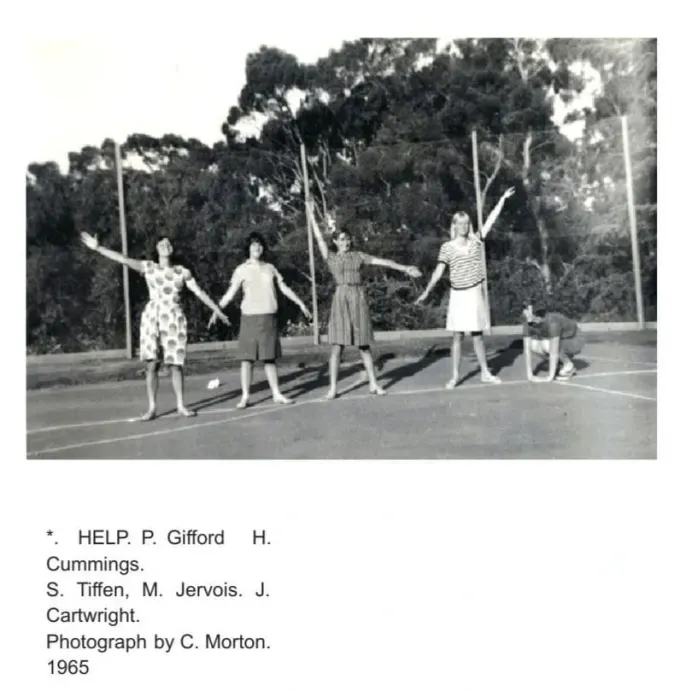
* My classmates and I leaving school. (Iona College. Hawkes Bay.) 1965

Provincial significance here. The AMP Show. Hastings. This is a ' hawkers' photograph at the road path into the grounds of the annual spring agricultural show.
.jpg@webp "image title")
" My daughters. My house that I built. My car". 1954. Photograph by Seth Tiffen.
Economic significance. Dad obtained funds to buy American cars. I was born in time to experience a 1949 Buick before a brief moment in low-slung Jaguar followed by a swift upgrade by Dad to a return to American cars; two Studebakers during the 1950s that coped with gravel roads.
PHYLLIS AND HER FAMILY
Mum's dad grew up in Auckland. He was Frederick William Burton (1875 - 1950)
son of Thomas Burton and Mary Fordyce Burton. Thomas had married a daughter of a Fordyce. Mary was born in the Shetland Islands, Scotland. That name stretches back to Stirling in the north of England.
The Burton family came from Durham England and then Sydney, then Wellington.
The couple is buried in Waikaraka Cemetery, Ōnehunga, Auckland.


Phyllis Burton. Wellington. c 1915

Mum's photograph of her son, Anthony. c 1950
SAN FRANCISCO 2016

Insert. 20.05.2026
These San Francisco inserts here:
this one insert set of images about San Francisco is because a few images from David's and my 2016 holiday create connections for me. Our holiday In San Francisco and to deeper inland California, in 2016, was just before taking our desired route to meet up with family nearer the latitude 50.87 of Canada for the summer.
Our trips of crisscrossing the Pacific were always enormously precious and gave off elation. We slept in the Mission. We dropped over to Embarcodero. I saw inside the Art museum, we lunched in Castro and took an outing past Sacramento to contacts in Davis. The trip was all part of the enjoyment of experience that gave me ongoing interest and gratitude for this American State. It had given me so many senses of connection. I bought Joan Didion's The Last Love Song. 2015 at Alice Monro's Bookshop on Vancouver Island before we set off. I would have picked up the Everyman compilation of hers. We tell ourselves stories in order to live.2006. when I got back (one from the collections of Everyman's Library that celebrated its 100 years) That volume of non-fiction is from her time 1968 - 2003. Didion was known for her expose on the decline of the American Dream.
David told us all, one day, that when finishing up his MA studies in socialwork, he learnt about Delancy Foundation, an addiction recovery center. The place was in the Embarcadero, in South Beach and still is. It inspired ex -felons to learn to build business ventures. He took this idea up forming a trio of colleagues to purpose here. The three built their programme in Christchurch, influenced by this model. David has offered an Appendix document about this, written by one of his colleagues, Murray Cree.
I was introduced to the spirit of California quite a few times. I made my way there with David, first in the 1970s. Passing through in the 80s and 90s on holidays and to weddings to Canada. Later, again, in 2009, 2010 and 2016.
The first pass through was after Mexico, to see his friend, Alecia, to see the Mission and a famous spaghetti house in 1972. With enormous enthusiasm, in 2001 on my way to a Conference in London, I went to Santa Monica University library and the Gugenheim. I called in at a library because I had an undergraduate essay to finish, due in New Zealand. I enjoyed sitting in there. I accessed Roland Barthes to read. He was a great teacher of connotation.

NEW ZEALAND
I describe here, briefly, my New Zealand farming world.
It excited me to be fluent about some of the land activity. I learnt moderately to do some of the tasks; to ride lambing beats in the August holiday breaks and drive the tractor for hay loading. Dad made me a small stock whip with which to mimic use. I had some rare moments with cattle, not allowed in the flock at all often.
By the 1950’s new object industries harnessing energy and production were added to the industry of hoe, till and plough. The agricultural technologies, after the English core, became American, German and Swedish.
I still remember iron. The single Iron hook on the gate made a beautiful click drop in the still winter air. At the farrier shop I loved being there to watch horseshoes being made. In connection, my dad’s slow step and careful bending was in line with moving heavy chain and loop equipment. He moved like a mountain climber would, sure and steady. When dad and I went out to inspect the water troughs for the sheep, one day, he squatted down and showed me some peat still as a layer in the soil. The farm basin had been drained around 1903. Yet, in the 50s Dad struck a match and showed how this almost started a smolder. Great granddad had written in his diary about the marsh drain running through that basin of land. Manual digging was done to several feet of depth.
What I took from my childhood was that the community lived in relation to the land as a provider. My female relatives took a one-year world trip in 1954 because the wool clip was exceptionally good. The primary industry had never been plain sailing. The parallel forces were markets that needed to be instigated and then supported. The growth and expansion of the corporate business world was ever increasing. What followed in the economy became, by the 1980s that thrust to late industrial capitalism – ‘neo liberal’ market that we have known for four decades. That era has been kiboshed to several degrees. Doubts about American leadership have caused a rupture. The insanity of imposed tariffs and other issues, and the outcome of war in 2025, have been putting nations to the test. This is 2026.
In the 1980s the old relationship of trade with Britain changed dramatically, farming stepped up in efficiency and the banks clearly stated they did not want mortgage debts to be too high. Every country in the world became more globally interconnected when US President Nixon pegged currency from gold to the dollar. He did that in 1971. This became, in current times, the massive conundrum of debts and debts management.
Then America had the 2008 Financial crash, affecting us all. Then we all had Covid. Then America had its October 6. Then, it is recorded, The Davos economic Forum Annual Meeting invited Prime Minister of Canada, Mark Carney to make a speech. (January 20, 2026) Attention, the EU summit May 2. 2026, 94
I grew up as the second to last generation after three, to have lived on Elmshill as a private family farm. It was all sold by 1999. More than half of the farmland was government owned since. That is planted in pine timber crop. Investors in the district range from Air New Zealand to private Americans and corporate Swiss. Some neighbouring farms in the 21st Century are linked into Tourism. An edge of the old family farm, Elmshill, became Mangarara Eco Lodge, for example. Wool, current day, is best associated with accompanied Tourism, for example, demonstrations of dog handling, toys, accommodation and recreational leisure.' Wool prices have ups and downs.
The key to agriculture here was to be entrepreneurial. An article in 2012 in the Huffington Post admired the changes New Zealand made in the 20th Century about free markets. I quote:‘When the subsidies were removed, it turned out to be a catalyst for productivity gains. New Zealand farmers cut costs, diversified their land use, sought nonfarm income as well, with other skills, and developed new products. Farmers became more focused on pursuing activities that made good business sense.’ The writer was intrigued by firm New Zealand 1980s policies. By the 1990’s some specialty elite export markets did develop. e.g. venison direct to Germany; merino wool direct to Italy, intimate trades. Wagyu beef direct to Japan for a while from NZ. Yet tragedies with drowned cattle overboard shocked attitude. 95 Liquidations of some investments occurred in 2025. It is from Colorado, in an article, that we may receive a small History of Wagyu Beef abroad from Japan today. 96 New Zealand Kiwi fruits became a winner in the 21st Century. What New Zealand is known for its, ‘concentrated and sweetened milk or cream, rough wood and butter plus other milk fats and oils’.97 By pre- adolescence, (12.5 yrs) I was away at Boarding school. There I became better attuned to thinking about women, our character types, and our histories. This all sits as a shadow of usefulness in a single sex school. Of course, I thought too about men. At highschool, some social life was family supported formals. Yet, as to frolic and the real, with sunshine, gritty sand and boisterous sounds, being inside the doors of the local rectangle of a community beach hall as a kid, at crammed events each December 31st, each summer, a constant three-person band of fiddle, base and guitar, stomped and played to heat and jollity. There I registered fragments of one type of history- life as a rage of festivity. At this summer hall the fiddle player had one leg. In other parts of the year, our local village hall was a wonderful set of surprises where Repertory skits were hammed by sometimes hopeless but at least willing farmer community adults and classic dance classes on Saturday mornings for us children. The dancing at the beach for New Year was hilarious, streamers and balloons dangling off the roof. I heard and saw jigs, quickstep and Gay Gordons, running inside and outside to the sand and the moonlit sea before I was tall enough to join into all of the movements up to past midnight. We children were still welcome to the near crest of midnight before this turning of the hour. We were ordered home before midnight, even though before midnight we were hardly ever stepped on. But, the hall was a tiny space and the adults needed their turn. For we kids at the beach, our tradition was to get a bit of sleep, or stay up playing cards or marhjong, then clamber up the steep limestone hill range behind us in the dark of early morning at 5.00am on every January First, to sit atop the hill to greet the sun. This was glory. Events of collective rambunctiousness proceeded to one or two High School formals, society modelling such as that of AMP showground balls. We bedecked ourselves in formal attire. Dancing was still linked to the quickstep. These were titivating social forms dealing with customs of social life, including drinking Pimms, not too dangerously being tripped by tent peg ropes, and darting in and out of tent flaps and tentative surging hormones. Dad was wise. He taught me to drive when I was thirteen. I had my license by fifteen. By seeing to it that I could drive and had a motorcar, I headed to Auckland, factually speaking, Papakura, to train at a Teachers college in 1966. I was to get out of the province.
What I took from my childhood was that the community lived in relation to the land as a provider. My female relatives took a one-year world trip in 1954 because the wool clip was exceptionally good. The primary industry had never been plain sailing. The parallel forces were markets that needed to be instigated and then supported. The growth and expansion of the corporate business world was ever increasing. What followed in the economy became, by the 1980s that thrust to late industrial capitalism – ‘neo liberal’ market that we have known for four decades. That era has been kiboshed to several degrees. Doubts about American leadership have caused a rupture. The insanity of imposed tariffs and other issues, and the outcome of war in 2025, have been putting nations to the test. This is 2026.
In the 1980s the old relationship of trade with Britain changed dramatically, farming stepped up in efficiency and the banks clearly stated they did not want mortgage debts to be too high. Every country in the world became more globally interconnected when US President Nixon pegged currency from gold to the dollar. He did that in 1971. This became, in current times, the massive conundrum of debts and debts management.
Then America had the 2008 Financial crash, affecting us all. Then we all had Covid. Then America had its October 6. Then, it is recorded, The Davos economic Forum Annual Meeting invited Prime Minister of Canada, Mark Carney to make a speech. (January 20, 2026) Attention, the EU summit May 2. 2026, 94
I grew up as the second to last generation after three, to have lived on Elmshill as a private family farm. It was all sold by 1999. More than half of the farmland was government owned since. That is planted in pine timber crop. Investors in the district range from Air New Zealand to private Americans and corporate Swiss. Some neighbouring farms in the 21st Century are linked into Tourism. An edge of the old family farm, Elmshill, became Mangarara Eco Lodge, for example. Wool, current day, is best associated with accompanied Tourism, for example, demonstrations of dog handling, toys, accommodation and recreational leisure.' Wool prices have ups and downs.
The key to agriculture here was to be entrepreneurial. An article in 2012 in the Huffington Post admired the changes New Zealand made in the 20th Century about free markets. I quote:‘When the subsidies were removed, it turned out to be a catalyst for productivity gains. New Zealand farmers cut costs, diversified their land use, sought nonfarm income as well, with other skills, and developed new products. Farmers became more focused on pursuing activities that made good business sense.’ The writer was intrigued by firm New Zealand 1980s policies. By the 1990’s some specialty elite export markets did develop. e.g. venison direct to Germany; merino wool direct to Italy, intimate trades. Wagyu beef direct to Japan for a while from NZ. Yet tragedies with drowned cattle overboard shocked attitude. 95 Liquidations of some investments occurred in 2025. It is from Colorado, in an article, that we may receive a small History of Wagyu Beef abroad from Japan today. 96 New Zealand Kiwi fruits became a winner in the 21st Century. What New Zealand is known for its, ‘concentrated and sweetened milk or cream, rough wood and butter plus other milk fats and oils’.97 By pre- adolescence, (12.5 yrs) I was away at Boarding school. There I became better attuned to thinking about women, our character types, and our histories. This all sits as a shadow of usefulness in a single sex school. Of course, I thought too about men. At highschool, some social life was family supported formals. Yet, as to frolic and the real, with sunshine, gritty sand and boisterous sounds, being inside the doors of the local rectangle of a community beach hall as a kid, at crammed events each December 31st, each summer, a constant three-person band of fiddle, base and guitar, stomped and played to heat and jollity. There I registered fragments of one type of history- life as a rage of festivity. At this summer hall the fiddle player had one leg. In other parts of the year, our local village hall was a wonderful set of surprises where Repertory skits were hammed by sometimes hopeless but at least willing farmer community adults and classic dance classes on Saturday mornings for us children. The dancing at the beach for New Year was hilarious, streamers and balloons dangling off the roof. I heard and saw jigs, quickstep and Gay Gordons, running inside and outside to the sand and the moonlit sea before I was tall enough to join into all of the movements up to past midnight. We children were still welcome to the near crest of midnight before this turning of the hour. We were ordered home before midnight, even though before midnight we were hardly ever stepped on. But, the hall was a tiny space and the adults needed their turn. For we kids at the beach, our tradition was to get a bit of sleep, or stay up playing cards or marhjong, then clamber up the steep limestone hill range behind us in the dark of early morning at 5.00am on every January First, to sit atop the hill to greet the sun. This was glory. Events of collective rambunctiousness proceeded to one or two High School formals, society modelling such as that of AMP showground balls. We bedecked ourselves in formal attire. Dancing was still linked to the quickstep. These were titivating social forms dealing with customs of social life, including drinking Pimms, not too dangerously being tripped by tent peg ropes, and darting in and out of tent flaps and tentative surging hormones. Dad was wise. He taught me to drive when I was thirteen. I had my license by fifteen. By seeing to it that I could drive and had a motorcar, I headed to Auckland, factually speaking, Papakura, to train at a Teachers college in 1966. I was to get out of the province.
POLITICS
I knew that the early political relationships in the country were that Hobson, Grey and Onslow, had all been Governor Generals who had come in and established power by force and or laws and by compliances, signed Acts by parliament and the country had emerged to be called New Zealand. Mum and dad chose to send me to the Presbyterian Iona Girls College in Havelock North. When I was sixteen, I remember standing close to Governor General Bernard Fergusson in my school hall, noting his meticulously badged costumed regalia and noticing the aide -de- camp’s alertness and formality. I read later that Fergusson had served time in the Black Watch in the British mandate in Palestine during the Arab Revolt in the 1936-39 period. I knew about the idea of a Palestine that carried the traits of willing co-existence in the thousands of years that led up to the early 1930s. My eldest aunt on my mother's side of family, Aunt Mavis, had worked in London in the 1920s in needlecraft. One day she had brought us home tourist objects. One object was a Fez hat. Another was an Armidello made into a basket.
SUMMERS at Nana's beach cottage, Kairakau Beach.

During the summers of the 1950s at home and the early 60s, my women and children took up residence for three weeks at Kairakau Beach. 98 The men were engrossed in shearing and hay making. They would arrive just for sausage and chop barbeque of a Saturday night and visit on Sunday. The front row properties of baches (around twenty -five of these having been built on the foreshore from the 1920's on through to the 1950s period), were mostly used by local farmers and village families from as far
away as Waipawa. These were disestablished and demolished when the Crown made new determinations for "Queen’s Chain". * (Easy to look up) in 1993 99 Nana’s asset went to her granddaughter Julia who sold the section rights in 1997.
In 2023 I was shown a letter my mother wrote to my sister Angela in 1965. It was dated July 8th. 1965. I had written to mum in early July, my birthday gift wish. ‘Witches-britches’ and tartan stockings. The britches had to be black ones. The local town shops only stocked white. Dad had taken mum and I to shop and specifically looked around. Naturally she made all reasonable attempts to meet my wishes. Mum had a lot on her mind that year. The supreme joy for her was finding out that my sister was pregnant. Four days later Mum had a heart attack while in the doctor’s office. She went into the hospital for ten days. I visited her there with dad and my brother. She looked sweet and cared for but flushed and very slowed down. To my and dad's shock, while standing outside the car to return me to school, dad was in a devastated crumpled state. It had hit him that the doctor’s information indicated how serious the event had been. He was advised that rest and care for mum were vital. We all knew that she was often short of breath. We all knew that she had had rheumatic fever as a child.
Dad had taken me straight back to school after that visit. My brother, who was working for dad, returned to work. My sister, Angela, unaware of this exceptional stress, had one phone call from our grandmother that appeared to alleviate the idea of a crisis. Angela was far away in the hills in support of her MA Botany student husband, John, who was co-conducting ecological research in the Orongaraongo mountain range. We are talking about wintertime here. Gumboots weather. Three weeks later mum went out early to feed the chooks and then hopped into bed again. Dad, having made her breakfast for breakfast in bed, took this to her and found that she had died.
We all had to cope with being shattered. I returned to our home for formalities. A week after mum died, I returned to school. Her death was just two weeks before my birthday. My thoughtful and festive cousin Anne, once a Burton, now a Fenwick, enamoured all of her life by our quick of tongue and well-travelled Aunt Mavis, sent me my first three pairs of coloured pantyhose (a fashion first) as a present. This gesture prompted grieving tears for mum. I asked dad if I could stay at school another year. I needed process time to compose myself for my solo launch into the world.
It takes a long time to mourn. Following that year, I went to Ardmore Teachers College in Auckland
In 2023 I was shown a letter my mother wrote to my sister Angela in 1965. It was dated July 8th. 1965. I had written to mum in early July, my birthday gift wish. ‘Witches-britches’ and tartan stockings. The britches had to be black ones. The local town shops only stocked white. Dad had taken mum and I to shop and specifically looked around. Naturally she made all reasonable attempts to meet my wishes. Mum had a lot on her mind that year. The supreme joy for her was finding out that my sister was pregnant. Four days later Mum had a heart attack while in the doctor’s office. She went into the hospital for ten days. I visited her there with dad and my brother. She looked sweet and cared for but flushed and very slowed down. To my and dad's shock, while standing outside the car to return me to school, dad was in a devastated crumpled state. It had hit him that the doctor’s information indicated how serious the event had been. He was advised that rest and care for mum were vital. We all knew that she was often short of breath. We all knew that she had had rheumatic fever as a child.
Dad had taken me straight back to school after that visit. My brother, who was working for dad, returned to work. My sister, Angela, unaware of this exceptional stress, had one phone call from our grandmother that appeared to alleviate the idea of a crisis. Angela was far away in the hills in support of her MA Botany student husband, John, who was co-conducting ecological research in the Orongaraongo mountain range. We are talking about wintertime here. Gumboots weather. Three weeks later mum went out early to feed the chooks and then hopped into bed again. Dad, having made her breakfast for breakfast in bed, took this to her and found that she had died.
We all had to cope with being shattered. I returned to our home for formalities. A week after mum died, I returned to school. Her death was just two weeks before my birthday. My thoughtful and festive cousin Anne, once a Burton, now a Fenwick, enamoured all of her life by our quick of tongue and well-travelled Aunt Mavis, sent me my first three pairs of coloured pantyhose (a fashion first) as a present. This gesture prompted grieving tears for mum. I asked dad if I could stay at school another year. I needed process time to compose myself for my solo launch into the world.
It takes a long time to mourn. Following that year, I went to Ardmore Teachers College in Auckland
.JPG@webp "image title")
. Cousin Anne facilitated many days of my growth when lived in Auckland. Years later, another moment of tears was when the Elsthorpe primary school held its centenary in 1998. I struggled at one point in the day. I went down to the Reserve for some solace. The Reserve has wonderful kahikatea trees. After that I popped into the St Stevens church and sat down. I hadn’t been there for thirty-two years. I cried there while looking at the embroidered altar runner, her needlework.
Basil Jensen, a farmer from the district that the family had known from my childhood, slipped into the church and sat down beside me. He handed me his handkerchief.
This, for all of us in the late 1950’s, had been our community church. Mum had played the organ there. I would recall that Jill Jensen took over the organ playing role. She played at Mum’s funeral.


Lyttleton. 1890. By Frank Tiffen.
Frank Louis Tiffen (1873 - 1938)
Frank Tiffen (grandad) was raised on Elmshill, along with his six siblings, he the last of seven. He had schooling in Elsthorpe, Christchurch and Nelson College, before living and managing Elmshill until his death.


TIFFENHawkes Bay Fred Tiffen (1828 - 1911)MORTGAGING, WAR, SOCIETY and CULTURE
Great grandparents Frederick and Lucy Tiffen settled and raised their family at Elmshill from 1860.
The farm lasted four generations.
We descendants were given several stories of Frederick's hard work and diligence. In the early 19th Century money was hard to come by. English capitalists provided most of the loans for Hawkes Bay mortgages before any bank was started. We descendants knew that Fred had worked every day, six days a week since age sixteen, hardly ever taking a break. He earned, saved, borrowed and realised a life dream. Lucy bore the seven children and they both had some enjoyable late years.
Fred, when married, had family support and a loan from one investor to buy sufficient land to parcel together a wool growing plan. He farmed and also enabled his family to become established in Napier from adolescence on for schooling.
This family was a family transporting themselves by oxen, horse and drey, saddle horses and eventually coaches. Fred's Frank, married, raised a family and carried on a similar pattern of tradition until the Ford Motor car.
Frank took Elmshill on in the 1890s and had it arranged as an Estate. F. L. Tiffen.
Frank's son, Seth Tiffen, (dad) became Estate manager all of his life from 1938 on. He with his wife, Phyllis, (mum) raised a family.
Anthony Tiffen, (brother) Frank's grandson, continued managing the business for his father and aunts after father's retirement, until the Estate dissolved. He then structured and worked his own unit of Elmshill with his wife, Sara, until 1999 and then they sold.
I collate some data about Fred and Lucy, their sons and daughters and point of activity in the appendices.
ELMSHILL WOOL SEASON c 1890

Mum was born in Sydney. Then the family lived in Island Bay, Wellington. Fred Burton was a Salvation Army Lieutenant General. 100 Grandmother was Ruth. Once I read that when Fred was working in Karori, Wellington, during the Spanish flu epidemic, he attended seventeen funeral services in one day.
Mum became a kindergarten teacher, a wife and mother. Her love of piano was fostered and endured. She loved literature too. She taught me about the word Levant. She adored doing home sewing and craftwork. She was excited to take us to the large cinema screenings in Auckland at the Civic when we used to take winter family holidays. Significant was that Mum sat for examination at age fifteen for a piano scholarship, unsuccessfully, in 1923. Imagine this.
Mum became a kindergarten teacher, a wife and mother. Her love of piano was fostered and endured. She loved literature too. She taught me about the word Levant. She adored doing home sewing and craftwork. She was excited to take us to the large cinema screenings in Auckland at the Civic when we used to take winter family holidays. Significant was that Mum sat for examination at age fifteen for a piano scholarship, unsuccessfully, in 1923. Imagine this.
Trinity College, London (instituted 1872) established an examination standard examination. report. 101
MUSIC EDUCATION: THEORY. c 1942
Imagine this diary entry as an opener here. It is from a woman called Lenise from Wanganui. The subjects were in 1942:
Theory of Music in First Steps: pitch, notes and rest, time, keys and scales. This girl by 1942 was in the Preparatory Division, gaining honours in the subjects of Elementary Notation, Time, Scales and Theory. The next step was to the Junior Division, to the subjects of notation, time intervals and terms. Lenise was now in Palmerston North. The momentum built. By 1945 she had arrived at Pianoforte, playing for Merit. The Theory study did not abate. By 1946 she was Singing with Merit. In the Senior Division and playing for Merit. Now we see a shift for the Grade V to the Royal College at London via the Convent where the music teacher taught. This was the musical route.
Imagine this diary entry as an opener here. It is from a woman called Lenise from Wanganui. The subjects were in 1942:
Theory of Music in First Steps: pitch, notes and rest, time, keys and scales. This girl by 1942 was in the Preparatory Division, gaining honours in the subjects of Elementary Notation, Time, Scales and Theory. The next step was to the Junior Division, to the subjects of notation, time intervals and terms. Lenise was now in Palmerston North. The momentum built. By 1945 she had arrived at Pianoforte, playing for Merit. The Theory study did not abate. By 1946 she was Singing with Merit. In the Senior Division and playing for Merit. Now we see a shift for the Grade V to the Royal College at London via the Convent where the music teacher taught. This was the musical route.
Amongst the family cluster, Henrietta Davenport (a daughter of the first Tiffen child, Charlotte, in France) had accomplished the piano. She had been a governess in Europe. Other female cousins of that generation were accomplished. Records show that Charles Hart Tiffen’s daughters (England) and also Belinda and Charles' daughters
(New Zealand) were accomplished. (Belinda and Charles’ daughter with violin).
Some modest incomes were made this way by the young women.
My sister, Angela, turned her life into music and music education. She loves the life of it.
It was so for a girl in many families, that they may have been launched to be a piano teacher or governess or wife and mother.
When I attended school, I travelled in competence far enough to pass four piano exams, enough to be the official page turner for our school music teacher when she performed public concerts. My lessons soon dissipated. There is magic in reading the scores of music. I claim pleasure for having spent hours in mum’s piano room. This was the living room in our house, the biggest room, only allowed to be used for music and social visits. I swooned in my young adolescent days after asking her to nudge me through the first chords of Claire de Lune. I had not enough attributes for playing but had an ear. Mum was so lovely, buying me such a standardly loved music score and giving me lessons on this. I weighed myself in a number of ways from some musical learning. Interestingly, my teacher would sometimes freeze in performance. Such a moment of being so close by as her page turner gave me a surprised clue about such a state of anxiety. It was a fascinating process to feel. One day she literally fled the stage. I loved being beside this woman, hoping, so young, to be supportive, calm and respectful. I took action in the importance of trusting mind, focus, breathing, calm and release in my future. I charged ahead at school to the Arts and practices of sport as well. I took to athletics and hockey to the swimming pool at school below the gardens, to love strokes and springboard diving. I became a house captain too and rather enjoyed doing a bit of 'championing'.
When I attended school, I travelled in competence far enough to pass four piano exams, enough to be the official page turner for our school music teacher when she performed public concerts. My lessons soon dissipated. There is magic in reading the scores of music. I claim pleasure for having spent hours in mum’s piano room. This was the living room in our house, the biggest room, only allowed to be used for music and social visits. I swooned in my young adolescent days after asking her to nudge me through the first chords of Claire de Lune. I had not enough attributes for playing but had an ear. Mum was so lovely, buying me such a standardly loved music score and giving me lessons on this. I weighed myself in a number of ways from some musical learning. Interestingly, my teacher would sometimes freeze in performance. Such a moment of being so close by as her page turner gave me a surprised clue about such a state of anxiety. It was a fascinating process to feel. One day she literally fled the stage. I loved being beside this woman, hoping, so young, to be supportive, calm and respectful. I took action in the importance of trusting mind, focus, breathing, calm and release in my future. I charged ahead at school to the Arts and practices of sport as well. I took to athletics and hockey to the swimming pool at school below the gardens, to love strokes and springboard diving. I became a house captain too and rather enjoyed doing a bit of 'championing'.


Red number 101 is 102
Aunty Eleanor Tiffen was the next family child after Seth. She was the first child of the 20th Century generation to marry. (correctives.co.nz/weddings)
THE IDEA OF FEMALES IN CULTURAL CONTINUENCE
Mother seemed to be aware of nursing and medical histories. For example, the New Zealander Archibald McIndoe was a plastic surgeon working during World War II with skills mum admired. The Zinkesan sisters from England were interesting to my mother. Anna Zinkesan painted a portrait of McIndoe.*
* https://artuk.org/discover/stories/sister-art-doris-and-anna-zinkeisen
Marie (1830-1913)
Maria Neill (nee Monteith) was born in Wellington. (correctives.co.nz/family settling.medicine ) She was an elder sister of my great grandmother, Lucy. She appears as a composer in, ‘Documenting New Zealand composers 1840 - 1920 ‘. She married an Imperial soldier, Captain George. J. Neill. 103 George was called to fight in Mauritius at one stage. He died in a barracks battle (a complicated story) in Melbourne in 1883. He was buried in Melbourne. Dad related to me how it was known in the family that her husband George was violent. Great grandad Fred had noted this fact in his journal that he had eventually written in 1910. Marie was given support to start divorce proceedings. She successfully sued for divorce in 1883 and was awarded a decree nisi. In her life Maria lived in Wellington and Napier and made her livelihood by teaching and holding a number of concerts. She remarried and continued to teach. Their baby Ada died in babyhood. She is buried in Bolton St in the Monteith family plot. One document: Composer: Neill, Maria (nee Monteith) – Mrs G. J. NeillMusic teacher, composer. CompositionsOur mazurka. (Wellington: Burrett, 1873)My spirit king. (Wellington: Burrett, 1880) Let it be said that Maria was beaten and bruised by Mr Neill. Her safety was paramount and her divorce released her to a life of preferred aspiration and self-dignity. When reading of Neill’s medley of posts where he was sent fighting as a soldier until he died, I thought of Mauritius and other cameos of Imperialists over the past three centuries. What hellish lives so many couples lived with this set of obligations that Empire building did to them. Profile on Mauritius History1505 Discovered by Portuguese Capt. Domingos Fernández on the ship 'Cirne', named Ilha do Cirne.1513 Re-sighted by Portuguese Capt. Pedro de Mascarenhas, who names the Archipelago the Ilhas Mascarenhas (Mascarene Islands).20 Sep 1598 Re-discovered by Dutch Capt. Wybrant Warwijk, claimed for the Netherlands, only a brief settlement. 7 May 1638 Dutch colony of Mauritius under the Vereenigde Oostindische Compagnie (United East India Company).16 Jul 1658 - 1664 Abandoned by the Dutch. 17 Feb 1710 Abandoned by the Dutch. 6 Sep 17
18 Claimed for France (Île de France) by Jean-Baptiste Garnier de Fougeray.23 Sep 1721 Formally claimed for France by Chevalier Jean-Baptiste Garnier de Fougeray (under Compagnie des Indes rule to 14 July 1767). 4 Jun 1735 - 23 Mar 1746 French Mascarene Islands colony (Île de France, Île Bourbon [Réunion], and Séchelles).14 July 1767 French crown colony.25 Oct 1797 - 19 Apr 1801 Nominally organized as a département of France, but was with the hands of a colonial assembly without relationship with the metropolis. This assembly divided the colony into 8 cantons. 3 Feb 1803 - 2 Sep 1810 Part of French colony of Indes-Orientales (Nominally included Île de Reunion [to 9 Jul 1810] French India, Île de France, Rodrigues, and the Séchelles to 17 May 1810).13-28 Aug 1810 British occupy Île de la Passe in the harbour of Port Imperial (Grand Port) under Samuel Pym (b. 1778 - d. 1855).29 Nov 1810 British invasion begins, Port Louis surrenders on 3 Dec 1810.31 Dec 1810 British colony (Mauritius).15 Oct 1814 British possession proclaimed in Mauritius according to the Treaty of Paris (of 30 May 1814).12 Mar 1968 Independence from U.K. (Mauritius).12 Mar 1992 Republic of Mauritius 104
David and I visited Kairakau beach for some weeks each summer, after David and I married, right through to 1989.
.jpg@webp "image title")
At the Mangakuri River Mouth, Kairakau Beach. Central Hawkes Bay 1981
.jpg@webp "image title")
correctives.co.nz/ further Elmshill family imagery at the end of this file >>
.jpg@webp "image title")

.jpg@webp "image title")
SETTLEMENT: PATANGATA, GREENMEADOWS and NAPIER
GREAT UNCLE HENRY TIFFEN (1816 - 1896)
The first New Zealand image book that referenced our migrant family was one black and white photograph (page eighty there) in New Zealand Views. It resides at MTG. in Napier. In this book is an array of still views of rivers, rocks, and trees of the whenua. Singly, there is one view that includes humans. There is an image of Henry Tiffen’s wife, sister-in- law, Lucy and her three daughters as small specks on the garden lawn. The full wide landscape that encompasses these people is of a small villa below the trees of a reserve that became known as Tiffen Park on Napier hill. The girls are being introduced to the game croquet. Henry had bought them new satin in London in 1855 when he travelled back there to marry his second wife, Louisa. Their dresses would have been made for them in Napier.
Kerryn Pollock is a writer for the Government library, Te Puna Mātauranga o Aotearoa, sums up European settlement well.
Pollock wrote:
European Settlement by the late 1840s.
‘Pastoral farmers in Wairarapa were pushing north in a quest for more land" 105 There were no contentious European settlements in the region. Henry moved north to find better pastures. Initially he leased land from Maori and ceased doing this once he recognized Crown logic and intent. Henry and Fred Tiffen purchased Crown land in 1855 and 1859. Henry Stokes Tiffen was out of the sheep business by 1874 and handed over the farm management to his brother Fred. His passion turned to the Greenmeadows development and his surveying business in and around Taradale. Henry would later take Ansell Tiffen on to replace Fred when Fred started up on Elmshill in 1860.
The image of Henry’s house has been retained by an oil painting. The painting was completed in 1876. Henry bequeathed it to the Napier museum a decade later. Chronicler Ian St. George combed through archives and newspapers to write about Henry. He presented and labelled the ' people in the ‘painting ‘in his book: Women playing croquet in the garden of HS Tiffen's home in 1867, Tennyson Street ... presented by H.S. Tiffen, Napier”, (on page 180). It is dated “17/4/86” for the MTG. To note, the book, Early New Zealand Photography. Images and Essays. 2011, is an Otago University Press publication that has its origins in a symposium, The Rise of Photography in New Zealand (1839- 1918) held at the Hocken Collections, University of Otago in December 2007. By this year the photograph collection had over 800,000 items in Te Papa that “massively outnumbered the combined holdings of all other objects and images in the collection. “106
Pollock wrote:
European Settlement by the late 1840s.
‘Pastoral farmers in Wairarapa were pushing north in a quest for more land" 105 There were no contentious European settlements in the region. Henry moved north to find better pastures. Initially he leased land from Maori and ceased doing this once he recognized Crown logic and intent. Henry and Fred Tiffen purchased Crown land in 1855 and 1859. Henry Stokes Tiffen was out of the sheep business by 1874 and handed over the farm management to his brother Fred. His passion turned to the Greenmeadows development and his surveying business in and around Taradale. Henry would later take Ansell Tiffen on to replace Fred when Fred started up on Elmshill in 1860.
The image of Henry’s house has been retained by an oil painting. The painting was completed in 1876. Henry bequeathed it to the Napier museum a decade later. Chronicler Ian St. George combed through archives and newspapers to write about Henry. He presented and labelled the ' people in the ‘painting ‘in his book: Women playing croquet in the garden of HS Tiffen's home in 1867, Tennyson Street ... presented by H.S. Tiffen, Napier”, (on page 180). It is dated “17/4/86” for the MTG. To note, the book, Early New Zealand Photography. Images and Essays. 2011, is an Otago University Press publication that has its origins in a symposium, The Rise of Photography in New Zealand (1839- 1918) held at the Hocken Collections, University of Otago in December 2007. By this year the photograph collection had over 800,000 items in Te Papa that “massively outnumbered the combined holdings of all other objects and images in the collection. “106
DAVID AND STEPH. CHRISTCHURCH. 1982
.jpg@webp "image title")
This was the freshly gentrifying Addington. We moved into the Wood Brothers Mill building, partly being turned into apartments. The principal tenant, Clive Brooker, dreamt of building a restaurant with a lift to it on the Top floor. Anyway, he made a beautiful papyrus pattern of bricks in the car park.
Our fun was seeing Canadian friends all visit again. Meanwhile, I started shooting some video weddings on weekends.
We had some life at Scarborough on the cliff tops through the mid 1980s.
Note. See the images from the Rangiora days by linking through ALL CONTENT button.
.jpg@webp "image title")

.jpg@webp "image title")
My sister Angela and I. 1952
.jpg@webp "image title")
Tom Robinson. 1994
.jpg@webp "image title")
Tom and David Robinson. Wellington. 2023

* FREIZE MAGAZINE
ADVENTURES WITH CULTURE


The artist Kokoschka Whilst reading Oskar Kokoschka’s book, My Life,(1974) I picked up on a voluminous atmosphere. This was critical thinking always hovering in every engagement. Kokoschka understood rationalism and emotion. A big example of the latter was his dashing of a doll after a passage of time, a designed doll that he had a specialist model maker create for him when he became devastated by a broken relationship with Alma Mahler the estranged wife of Gustaf Mahler the Austrian composer. At the point of this doll being expunged, it was late after a party in Vienna, he macheted the doll’s head, flooding it with red wine, and in fact walked right out of Europe. It was 1937, a good year, in retrospect, to exit Europe. The incident could not have been a more unique drama to know about - this man working on his personal anguish with intensity. New ideas from Freud were in the air at this time.
New York Times Essay on Toynbee: circa. 1989
Everyone knew that India, China, and Islamic states also had lengthy histories; but these were specialist fields of inquiry, disregarded by historians. . . [Toynbee] was able to introduce to a large portion of the world's reading public the simple truth that Asians, Africans, Amerindians . . . had a history that was independent of and analogous to the history of Europeans. The vision of a human past, cast, as he said, ''not just in western terms'' was . . . his great and central contribution to our tradition of learning, and ought to become his enduring claim to fame. 107
Kokoschka knew of this. Theatre as text was an artform he liked to produce. His performative self with the doll appeared to be a successful tactic. Kokoshka, was an enormously early psychodramatist in my opinion. He had determined to be a pacifist in the 1914 - 1916 period. Intelligently, he took off for the peace and quiet of Cornwall and after that to Sweden and finally, to Switzerland.
He became a fulltime painter and a teacher of significance. Graduating firstly from an Art & Craft school, he was of the same view as the architecture and modernist Alfred Loos, that illustrative ideas were unsuitably decorative in Austria. This is an excerpt from an Alfred Loos talk in 1908: “Critic of the fashion of the Art Nouveau movement within Austria” 108 The absence of ornament has raised the other arts to unknown heights. (However) Beethoven’s symphonies would never have been written by a man who walked around in silk, velvet and lace. The person who runs around in a velvet suit is no artist, but a buffoon or merely a decorator. We have become more refined, more subtle. ‘he wrote. Loos was a mentor and a good friend. Kokoshka was keen to clarify identity. He wrote in his autobiography about aesthetic direction: ‘German Expressionism, coming as it did at a fateful moment in history of civilization, recalls the Children’s Crusades of the Middle Ages and the destruction of images in the Wars of Religion, Speaking as a historian, I should say that no one’s moustache - not the Kaiser Wilhelm's, nor Stalin’s nor Hitler’s - is equal in historical importance to the artistic movement of Expressionism in the civilized nations of Western Europe and Russian.’ 109The technique that he applied in his teaching at his summer school for Internationals from 1949 on at Salzburg, was to encourage students to be alert in ‘seeing’. One aim was to capture the very act of animation of people as they moved. Another way of saying this was to foster pupil alertness by encouraging a fast grasp on a moment, within a structure of a whole wide view.For his many landscape portraits from high points, often from hotel rooms, he would use two window views in combination. His focus upon portraits - of interest, several pairs of people - the way he used his brush, his plays and his writing, made for such a full life from a very young start in what had been for him, aka Vienna, life in a crucible of music and culture. Undoubtedly, my experience of meeting Hilde Goldschmidt and hearing him on the phone with her in December of 1970, left me with wonder. Yes, I heard these two on a telephone line, laughing away, circa 1970. By hearing them together and then filling with more knowledge of their times, the impact was a recognition of the winds of change in Art happening in Europe. Kokoschka’s example led me in a direct line, to wish to demonstrate my appreciation for him as an individual driver. An Excerpt. Anschluss – Alice in Wonderland. (1942) 110 painted in England when Kokoschka was in exile. * Kokoshka's commitment to being a painter appears to have been a very undistracted attitude. He claimed the importance for Germans to explore Expressionism. He wrote about this work that he later titled, Anschluss – Alice in Wonderland. 1942. The Image excerpt -the middle section portrays the three silent monkeys of Buddhist tradition in three military hats in the painting Anschluss –Alice in Wonderland.1942) painted in England when Kokoschka was in exile. It was a response to the disaster of the loss of his city of origin, Vienna. Ich sage nochmals: Diese Bilder malte ich nicht, weil ich mich politisch in der oder jener Richtung engagiert fühlte. Ich blieb ja auch in England nur aus dem Grund, um den Krieg einmal von der anderen Seite der Barrikade zu sehen. Die Menschen gleichen sich

He found the urgency to say, ‘I reiterate I did not paint these images because I felt politically motivated in one direction or another. The only reason I stayed in England was to see the war from the other side of the barricade. The people resemble each other. (ed. trans.)’ 111
* He invented paintings to imply what he saw - as in comprehended.

Kokoschka taught many summer drawing schools in the 1950s to 60s. (online image )
I began to perceive from his writing that he stayed beholden to the European roots of mythology and figures as references for his mind. He took a very personal expressive route, not interested in trying out a new style, for example, Jugendstil, where decorative ideas were trending amongst peers. 112 I was conscious of OK’s love affair with Alma Mahler. His autobiography also alerted me to David having had such amazing conversations with Hilde Goldschmidt daily, as he began the first draft translation of the German about her when we lived with her that 1973 summer.
Kokoschka wrote about the 1920s, music, Mahler and life. I began to recognize more succinctly the supposition of the Western art history story of New York supplanting Paris as the Art capital. And this was not all.
Kokoschka wrote about the 1920s, music, Mahler and life. I began to recognize more succinctly the supposition of the Western art history story of New York supplanting Paris as the Art capital. And this was not all.
*‘Anschluss – Alice in Wonderland. ‘Anschluss – Alice in Wonderland can be read as stark criticism by the painter of the Allies’ reticent reaction to Hitler’s aggressive military programme
2024
I recognized that my own research was gelling to further scope. I took a solo trip to London, Paris, Canada, San Francisco, the Amalfi coast, Rome and Parma in 2001. That got me fueled to short list some of the ideas that I wanted to reflect upon then. I returned home that year just a few weeks before the Twin Towers came down. I would go on, in the face of excitement that was surrounding the exponential growth of digital platforms worldwide, to make a documentary about video game developers.
Recently, I went to the Christchurch town hall to listen as Paul Lewis played The Emperor suit. (Piano Concerto No 5)113 On the same day our son, with companions, was visiting Super Nintendo Park, Tokyo, aka blooloop world, experiencing something totally different. 114 Lewis's skill was so impressive to me that historical time with music performance actually collapsed the years. Octaves of oxygen rushed through. I sensed that the audience felt this. I acknowledge human admiration and affection for the Arts: of performing, of patterns, of structures, inventions and humours that make up experience that become what we call culture. Both forms acknowledge human admiration for the art of structure. In this meta consideration, it is no wonder that landscape painting preceded Expressionism, and Romanticism followed after the Renaissance. So, yes, as I, along with the millions who saw a performance of Hamlet with Yorick, I too walked across a bridge over the Tiber, considered even that the hūia (such a significant already extinct bird) had perished even more quickly at the hand of ceremony (refer the Prince of Wales visit that set a terrible Hui feather trend, in 1901, or read Buller and Buller Birds) * and went to see Turners at TATE Britain as much as I knew I had to be immersed in Warhol and ROTHKO.
In the ‘90s I was inspired by the novelist, Michele Desbordes. Desbordes created two deeply endearing fictions. One was The Maid’s Request. (1998)115 Desbordes was an art Historian prior. In this writing she embodied the shadow of da Vinci in a landscape. The narrative drew an Italian maid in a touchingly oblique portrayal as having a yearning. “Please, Sir, relieve me of my constant duties”. The character says under her breath. The second book was, The House in the Forest. (2001) Translated 2004. A young son from very poor beginnings returns from a Caribbean island, too late for him to achieve building a larger life of substance. He bypassed visiting his mother when he returned, hiding away to die quietly. I read CHROMA, by Derek Jarman 1998), where the Introduction quotes Leon Battista Alberti, On Painting from 1435. He wrote, ‘Curled up in a crock of gold at the end of a rainbow, I dream of colour……’116 Also, there is just that moment, in Woolf’s To the Lighthouse where Mrs Ramsay stares at a table and thinks about the " white dinner plates'’, and loves the French day long cooked stew.117 I remember when we had our son in 1988, when I waited to buy an Apple II, my thoughts were that colour as well as increased standards of digital resolution would be a thing for him. That and Animation, for he had seen Fantasia (1940) I had danced on a warm summer day to Super 8 Kodak on my grandmother's lawn, Bing Crosby singing, I ‘m Dreaming of a White Christmas’. So I was, as I had been from English, somewhat Americanized by then too. Crooners. We all want to avoid the hard stuff. I think over Danto writing about the Treaty of Westphalia (1648). Hegel pointed out that this was the beginning of the secular state - what this meant for Art (after the thirty- year war) as no longer imitation but journeys of self-expression. I had, by age twenty- one, seen ‘ready art’. I had seen Duchamp's urinal R. MUTT at the New York Gallery, MoMA in 1971/7212. I saw, as mentioned, a retrospective of Warhol in Tate Britain with the Marilyns and the Campbell soup cans then. (Out of interest, see, NEW ORDER. Spring. 2019. MoMA). I found a fragment of Oscar Kokoschka writing about Titian, about his success with mastery. 118 It is from sensibilities paced in such as these literatures that I am here now. Starting with books that my mother supplied in our household, then those through schooling, the backdrop of farming and provincial town life was my start. When I was an adult, I made an effort concerning what Mother had reminded me of -the importance of cultural gleanings from fiction. There would be GODARD for me to read later on. His literature list could start at Proust, Cervantes and Dante. I didn’t ever quite cut that mustard, yet I became devoted to the field that is the Arts, giving so much to comprehension of all that was not said rather than what was ever shown- the Arts as passionate breathings of speech addressing how, why and when.
Recently, I went to the Christchurch town hall to listen as Paul Lewis played The Emperor suit. (Piano Concerto No 5)113 On the same day our son, with companions, was visiting Super Nintendo Park, Tokyo, aka blooloop world, experiencing something totally different. 114 Lewis's skill was so impressive to me that historical time with music performance actually collapsed the years. Octaves of oxygen rushed through. I sensed that the audience felt this. I acknowledge human admiration and affection for the Arts: of performing, of patterns, of structures, inventions and humours that make up experience that become what we call culture. Both forms acknowledge human admiration for the art of structure. In this meta consideration, it is no wonder that landscape painting preceded Expressionism, and Romanticism followed after the Renaissance. So, yes, as I, along with the millions who saw a performance of Hamlet with Yorick, I too walked across a bridge over the Tiber, considered even that the hūia (such a significant already extinct bird) had perished even more quickly at the hand of ceremony (refer the Prince of Wales visit that set a terrible Hui feather trend, in 1901, or read Buller and Buller Birds) * and went to see Turners at TATE Britain as much as I knew I had to be immersed in Warhol and ROTHKO.
In the ‘90s I was inspired by the novelist, Michele Desbordes. Desbordes created two deeply endearing fictions. One was The Maid’s Request. (1998)115 Desbordes was an art Historian prior. In this writing she embodied the shadow of da Vinci in a landscape. The narrative drew an Italian maid in a touchingly oblique portrayal as having a yearning. “Please, Sir, relieve me of my constant duties”. The character says under her breath. The second book was, The House in the Forest. (2001) Translated 2004. A young son from very poor beginnings returns from a Caribbean island, too late for him to achieve building a larger life of substance. He bypassed visiting his mother when he returned, hiding away to die quietly. I read CHROMA, by Derek Jarman 1998), where the Introduction quotes Leon Battista Alberti, On Painting from 1435. He wrote, ‘Curled up in a crock of gold at the end of a rainbow, I dream of colour……’116 Also, there is just that moment, in Woolf’s To the Lighthouse where Mrs Ramsay stares at a table and thinks about the " white dinner plates'’, and loves the French day long cooked stew.117 I remember when we had our son in 1988, when I waited to buy an Apple II, my thoughts were that colour as well as increased standards of digital resolution would be a thing for him. That and Animation, for he had seen Fantasia (1940) I had danced on a warm summer day to Super 8 Kodak on my grandmother's lawn, Bing Crosby singing, I ‘m Dreaming of a White Christmas’. So I was, as I had been from English, somewhat Americanized by then too. Crooners. We all want to avoid the hard stuff. I think over Danto writing about the Treaty of Westphalia (1648). Hegel pointed out that this was the beginning of the secular state - what this meant for Art (after the thirty- year war) as no longer imitation but journeys of self-expression. I had, by age twenty- one, seen ‘ready art’. I had seen Duchamp's urinal R. MUTT at the New York Gallery, MoMA in 1971/7212. I saw, as mentioned, a retrospective of Warhol in Tate Britain with the Marilyns and the Campbell soup cans then. (Out of interest, see, NEW ORDER. Spring. 2019. MoMA). I found a fragment of Oscar Kokoschka writing about Titian, about his success with mastery. 118 It is from sensibilities paced in such as these literatures that I am here now. Starting with books that my mother supplied in our household, then those through schooling, the backdrop of farming and provincial town life was my start. When I was an adult, I made an effort concerning what Mother had reminded me of -the importance of cultural gleanings from fiction. There would be GODARD for me to read later on. His literature list could start at Proust, Cervantes and Dante. I didn’t ever quite cut that mustard, yet I became devoted to the field that is the Arts, giving so much to comprehension of all that was not said rather than what was ever shown- the Arts as passionate breathings of speech addressing how, why and when.
* Extinction stories
For example. NZ NAT GEOGRAPHIC
A small interlude here

The stock market at Standard & Poors plunges during the fourth week of the Iran war. 2026
https://mail.google.com/mail/u/0/#inbox/FMfcgzQgKvMgbQsHKRNpHmQdZhHDBfTp
1959
tiffens from paris
Charles Hart Tiffen’s son Charles and his second wife, Suzanne, who had just been on safari in Africa, visited us from Paris near Centenary time. They brought with them a ginormous platter of dried fruit, arriving with it wearing their khakis. I was smitten by their worldliness. I realized that I didn't need to stay provincial - the world was out there as well as here. All was to be a wonder. (Charles was in Real Estate on the Italian Riviera. He and his first wife raised four children.)

Suzanne met all of our 20th Century women in the family that week

Central New Zealand. Waioweka Gorge
I set out on a road trip to visit two cousins in Tauranga and Cambridge in 2023 and go and visit the Tairawhiti Museum. This gorge is a regenerating bush area. Attempts at farming, particularly in the returned soldier period after World War I were unsuitable through much of the Waioeka River area. Ferns, it is to be noted, enthusiastically always regrow.
I quote: “Maori accessed the densely bush-covered landscape of the Waioeka River for hundreds of years. They created tracks and used the Waioeka River to access gardens and establish temporary settlements on its banks. Most of the Gorge was settled for farming in the early 1900s, with sections being 700 to 1500 acres. Rapid progress was made felling the bush and establishing pasture for livestock. However, the steep terrain, poor soils, wet climate, rapid regeneration of fern and bush and erosion made it difficult for farms to remain viable. The slump in wool, sheep and cattle prices in the early 1920s and 1930s saw many of the Waioeka farmers abandon their farms and everything they had worked for. The forest has been regenerating ever since on the abandoned farmland with much of it now in the Waioeka Scenic Reserve “.119 Prolific weeds on the river edge. It flows north for 65 kilometres from Te Urewera National Park.
Land regenerating back to forest. Prolific weeds on the river edge. It flows north for 65 kilometres from Te Urewera National Park. (Note. There is one charmed project going on in the hills about protecting the whio duck. https://www.easternwhiolink.co.nz/)

Waioeka River from the Waioweka Gorge Road. 2022. Photograph by Stephanie Beth.


.jpg@webp "image title")
Lyttelton. 1889
Two Photographs by Frank Tiffen. A building, men, young boys, a girl.
.jpg@webp "image title")

Media entertainment besides cinema and plays and books for mum. National Radio


Irene Tiffen. (nee Bone) 1890 - 1979 c 1967. Widow in 1938. Photograph by Priscilla Feickert Note. Media for Nana. Classical radio and records.
.
Nana IRENE's Garden. Elmshill. 1968. Photographs by Priscilla Feickert


.JPG@webp "image title")

.jpg@webp "image title")
In 1965 I saw four Hitchcock films in a row at school and I recognized a ‘maestro ‘Cinema outings were the biggest thrill for me. Every Saturday night a movie, throughout my school years. (16mm screenings in the school hall. Girls Boarding school. Rugs on knees)

What did women want?
.jpg@webp "image title")
Sisters Olga and Phyllis Burton. c 1922. Wellington. My aunt and my mother.
The daughter of Anna Zinkeisen (1901 - 1976) the Suffolk painter of the early 20th Century, quoted her mother in 2021 that she said, “I had assumed that all women became painters and all men soldiers and sailors”. The daughter was a society portraitist and equestrian painter and remembered for War Art. 120
I have mentioned the significance of a) mum sitting for a piano scholarship. Mum kept in touch with her sisters. Olga became a professional violinist. She and her doctor husband raised a family in Auckland. Bernice raised a family with Gordon Cole and became a music teacher at Nelson Girls High School. Doreen Phoebe married Bernard Curley. They raised a family. I recall that I was told that Doreen was a nurse who cared for Bernard when he was a recovering invalid soldier. They lived in Napier. Margorie married and had children. They lived in Marton. Bruce married Peggy and they had children. They lived in Napier. The siblings' eldest brother, Fred, lived in Nelson. He had six children with Molly, whom I met one or two times. He also had been father of a first child, my eldest cousin Anne, Anne, dear to me as she was so conscious of the affect my mother's death had meant to me. Anne hosted me so many weekends in Auckland when I was first a student. Concerning Mavis, the family's oldest girl, I came to recognize that she held high family status. The family brother did too. He had been in the Second World War. He then became known as a food and banquet champion. Mavis often came to stay with us on the farm in school holidays. Mavis was everyone's eldest sister. Specifically, it was her Norwegian "Hardangersøm” samples of pulled thread work were spectacular. She taught my sister Angela all the stitch styles. One was the Indian chikankari (चिकनकारी چیکن کاری) stitch. 121 The Persian word refers to artisan garments sewn for moghuls. I quote, “Chikan is a delicate and done hand embroidery on a variety of textile fabric like muslin, silk, chiffon, organza and net. White thread is embroidered on cool, pastel shades of light muslin and cotton. What was utterly marvellous to understand was that Mavis had been abroad when young. She had been a sewing craft teacher. We knew that she came to us at the farm from Nelson on her holidays. But when she was young, I only fully gathered that she had worked in London, in terms of what this meant to her as awareness in the 1920s. She had taught at the Royal School of Needlework in Hampstead in London for seven years. This school was a spin off from the English Arts & Crafts movement. I was very impressed, later in adulthood, realizing that Mavis had mingled with such a witty English cluster. 122 She became significant to me when I placed her in a context as broad as this. Wit was her entertainment. I remember one time staying with her when I was asked to attend a panel discussion in Nelson on Feminist issues. Sonya Davies was one of the panel members. In her time, she had gone, with a group of women, to sit on the rail tracks for a protest in 1955 in Nelson against a threat of the rail services closing. 123 Mavis, that day, knowing that I was going off to the gathering, thrust over to a rose bush on her footpath and clipped and placed a white one in my lapel to send me on the way with a flourish. I had never sung the women's song, but it was, suddenly, quite recently, I considered what roses do imply , that suffrage was for good wages and dignity in work. There was more to Mavis for brazen charm. She brought home the odd treasure, translated as weird bits and bobs from tourism. We had a tarboosh hat (fes) in the house from her, for example. We also, horrifically, had a sewing basket, lined in silk, made out of a preserved armadillo from her. This was an example of preserved taxidermy, as frightening as elephant foot cigarette ash trays. (The Armadillos were ' first introduced at the 1902 New York World Fair, called ' bargain folk art'.! I read). Through these objects, along with additional accumulating visits that our family made to Wellington Dominion Museum, Auckland War Memorial Museum and the Christchurch and Otago Museums, I began to gather a trajectory of understanding of Empire, trade, cultures and commerce. Mavis would have sailed the Suez. She would have felt the sounds and smelled the smells of Ottoman times.
I have mentioned the significance of a) mum sitting for a piano scholarship. Mum kept in touch with her sisters. Olga became a professional violinist. She and her doctor husband raised a family in Auckland. Bernice raised a family with Gordon Cole and became a music teacher at Nelson Girls High School. Doreen Phoebe married Bernard Curley. They raised a family. I recall that I was told that Doreen was a nurse who cared for Bernard when he was a recovering invalid soldier. They lived in Napier. Margorie married and had children. They lived in Marton. Bruce married Peggy and they had children. They lived in Napier. The siblings' eldest brother, Fred, lived in Nelson. He had six children with Molly, whom I met one or two times. He also had been father of a first child, my eldest cousin Anne, Anne, dear to me as she was so conscious of the affect my mother's death had meant to me. Anne hosted me so many weekends in Auckland when I was first a student. Concerning Mavis, the family's oldest girl, I came to recognize that she held high family status. The family brother did too. He had been in the Second World War. He then became known as a food and banquet champion. Mavis often came to stay with us on the farm in school holidays. Mavis was everyone's eldest sister. Specifically, it was her Norwegian "Hardangersøm” samples of pulled thread work were spectacular. She taught my sister Angela all the stitch styles. One was the Indian chikankari (चिकनकारी چیکن کاری) stitch. 121 The Persian word refers to artisan garments sewn for moghuls. I quote, “Chikan is a delicate and done hand embroidery on a variety of textile fabric like muslin, silk, chiffon, organza and net. White thread is embroidered on cool, pastel shades of light muslin and cotton. What was utterly marvellous to understand was that Mavis had been abroad when young. She had been a sewing craft teacher. We knew that she came to us at the farm from Nelson on her holidays. But when she was young, I only fully gathered that she had worked in London, in terms of what this meant to her as awareness in the 1920s. She had taught at the Royal School of Needlework in Hampstead in London for seven years. This school was a spin off from the English Arts & Crafts movement. I was very impressed, later in adulthood, realizing that Mavis had mingled with such a witty English cluster. 122 She became significant to me when I placed her in a context as broad as this. Wit was her entertainment. I remember one time staying with her when I was asked to attend a panel discussion in Nelson on Feminist issues. Sonya Davies was one of the panel members. In her time, she had gone, with a group of women, to sit on the rail tracks for a protest in 1955 in Nelson against a threat of the rail services closing. 123 Mavis, that day, knowing that I was going off to the gathering, thrust over to a rose bush on her footpath and clipped and placed a white one in my lapel to send me on the way with a flourish. I had never sung the women's song, but it was, suddenly, quite recently, I considered what roses do imply , that suffrage was for good wages and dignity in work. There was more to Mavis for brazen charm. She brought home the odd treasure, translated as weird bits and bobs from tourism. We had a tarboosh hat (fes) in the house from her, for example. We also, horrifically, had a sewing basket, lined in silk, made out of a preserved armadillo from her. This was an example of preserved taxidermy, as frightening as elephant foot cigarette ash trays. (The Armadillos were ' first introduced at the 1902 New York World Fair, called ' bargain folk art'.! I read). Through these objects, along with additional accumulating visits that our family made to Wellington Dominion Museum, Auckland War Memorial Museum and the Christchurch and Otago Museums, I began to gather a trajectory of understanding of Empire, trade, cultures and commerce. Mavis would have sailed the Suez. She would have felt the sounds and smelled the smells of Ottoman times.